

Isis The Great Lady, Mistress of Magic and Mother of Gods
Isis is one of the most beloved, powerful and enduring goddesses of the ancient world. She is the Great Lady, Queen of the Earth, Light Giver of Heaven, Mistress of Magic, Mother of Gods, Star of the Sea, Queen of the Throne, She Who Is Rich in Spells, Great of Sorcery, Redemptress, and The Many Named.
Few goddesses have been venerated so widely, for so long, and in so many forms. Isis was worshipped in Egypt for thousands of years, but her influence eventually spread across North Africa, Western Asia and Europe, reaching as far as the Thames River in England. Her worship was adopted by Greeks and Romans, and later echoes of her image and titles appear in Christian devotion to the Virgin Mary.
Isis is both intimate and cosmic. She is the faithful wife, grieving widow, protective mother, mighty queen, divine magician, healer, sea-protectress and initiatory goddess of the Mysteries. She is compassionate because she knows grief, exile and struggle. She is powerful because she possesses magic, wisdom and the hidden names of creation.
The Name and Symbols of Isis
The name Isis is the Greek form of the Egyptian word associated with the throne. This is deeply significant because Isis is not only a goddess who sits upon a throne; she is the throne itself, the foundation of divine kingship. Through her, royal power is legitimised, protected and transmitted.
She is often depicted crowned with a lunar orb set between the horns of a cow, bull or ram. Her symbol is the Moon, yet she is also associated with Sirius, the Dog Star, whose rising was sacred in Egyptian religion and linked with renewal, timing and cosmic order.
Isis is also identified with the constellation Virgo and with the sacred feminine principle in its fullest form. She represents motherhood, protection, fertility, wisdom, magical authority and the living power of the divine feminine.
Isis and the Great Mother
Isis is the ancient Egyptian Mother Goddess, prototype of the faithful wife and fertile, protective mother. In art, she is often shown holding her son Horus in her arms, an image that later strongly influenced Christian depictions of Mary holding the Christ child.
Yet Isis is far more than a maternal figure. She is a sovereign goddess of life, death, magic, healing, protection, fertility and resurrection. She can restore the dead, heal the sick, protect children, guide travellers, assist women in childbirth and perform miracles beyond human comprehension.
The Greeks identified Isis with Aphrodite, Artemis, Demeter and Persephone, revealing how vast and complex her nature seemed to them. She was love, motherhood, fertility, wilderness, grain, underworld mystery and divine power all at once.
Isis and Osiris
The myth of Isis and Osiris is one of the most famous and moving sacred stories of the ancient world. Isis was the sister and wife of Osiris, her beloved twin, consort and soul mate. Their story is a myth of love, betrayal, death, magical restoration and divine motherhood.
Osiris was murdered by his jealous brother Set, who later dismembered his body and scattered the pieces. Isis, refusing to surrender to despair, searched the land for the body of her beloved. Through devotion, grief and unmatched magical skill, she gathered the pieces of Osiris and reassembled him.
With her magic, Isis breathed life into his body so that they could be together one final time before Osiris departed to become lord of the underworld. From this union, Horus was conceived. His birth was posthumous and miraculous, and Isis became the divine mother who protected her child from Set until he was strong enough to claim his destiny.
In another version of the myth, Set later cut Osiris into fourteen pieces and scattered them along the Nile. Isis searched for the pieces again, but this time she buried each one where she found it, allowing Osiris to fertilise the land. This act links Isis not only with resurrection, but with the sacred fertility of Egypt itself.
Isis, Horus and the Protective Mother
After Horus was born, Isis became the great protective mother. She hid with her child, guarded him from Set, healed him when he was threatened and ensured that he survived long enough to become the avenger and rightful heir of Osiris.
This aspect of Isis made her beloved by mothers, children, the vulnerable and the oppressed. She was not a distant goddess untouched by suffering. She knew fear, poverty, wandering, widowhood and the desperate need to protect a child from danger.
This is one reason Isis became so universally loved. She was divine, but she had experienced human pain. She was the most powerful sorceress in creation, yet she also appeared as the single mother in hiding, forced to use every ounce of strength and magic to keep her son alive.
Isis and the Secret Name of Ra
In one important magical tradition, Isis was originally mortal but so skilled in sorcery that she desired immortality. She knew that the secret name of the sun god Ra contained immense power, and she resolved to obtain it.
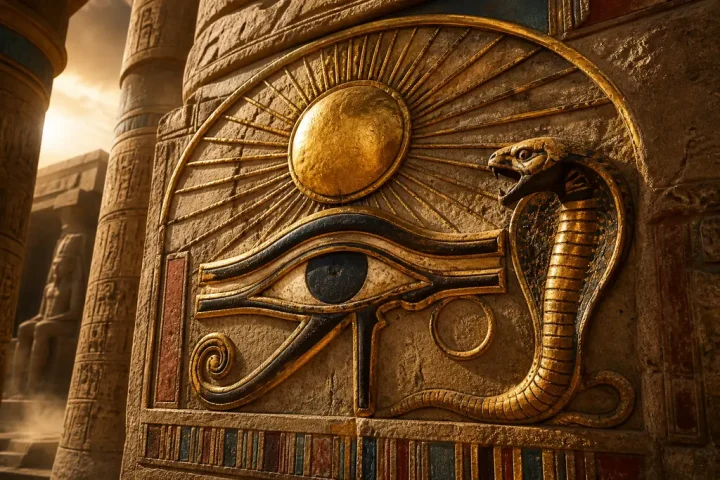
Isis gathered some of Ra’s spittle and used it to create a serpent, which she placed in his path. When Ra was bitten, he suffered terrible agony. Isis offered to heal him, but only if he revealed his secret name. At last, in pain and desperation, Ra gave her the name.
By learning the hidden name of the sun god, Isis obtained access to one of the most powerful forces in creation. This myth reveals her as the goddess of magical strategy, sacred knowledge and hidden power. She does not merely possess magic; she understands the structure of divine power itself.
In occult tradition, names are not empty labels. To know the true name of a being is to know its essence. Isis, by acquiring the secret name of Ra, becomes Mistress of Magic in the deepest possible sense.
Isis as Goddess of Magic and Healing
Isis is one of the greatest magical figures in world mythology. Her power is so immense that even Anubis, god of death and embalming, is subject to her influence. She is invoked for healing, childbirth, protection, resurrection and magical intervention.
People prayed to Isis on behalf of the sick and dying. She was believed to visit the sick at night, brushing them gently with her wings while speaking healing incantations. Her magic was tender and fierce at the same time. She healed with compassion, but she also commanded the unseen forces with absolute authority.
Isis is therefore deeply associated with magical arts, sorcery, thaumaturgy, occult knowledge and spiritual healing. Her image has long been used in connection with ritual magic, Hermetic wisdom and the hidden mysteries of transformation.
Isis of the Mysteries
Isis is not only a mythological goddess. She is also a goddess of initiation. In the Egyptian Mysteries, she represented the female aspect of the Divine, the Universal Mother of all living things, and the embodiment of wisdom, truth and power.
She was called the goddess of ten thousand names, a title that reflects her ability to appear in many forms and answer to many identities. In the Roman novel The Golden Ass by Lucius Apuleius, Isis tells the narrator that different peoples know her by different names, but that only Egyptians and Ethiopians call her by her true name. This suggests that Isis could be approached through many masks, traditions and forms.
In the Mysteries, Isis is often veiled. The veiled Isis represents hidden truth, sacred wisdom and divine reality concealed from ordinary perception. To the initiate, she may lift the veil, but what is revealed must remain secret.
The famous inscription associated with her temple at Sais declares that she is all that has been, is and shall be, and that no mortal has lifted her veil. This image of the veiled goddess became one of the most powerful symbols in Western esotericism.
Isis and Hermetic Wisdom
In Hermetic tradition, Isis is closely associated with divine wisdom and secret knowledge. According to Plutarch, some ancient writers believed Isis to be the daughter of Hermes, while others said she was the daughter of Prometheus. Plutarch interpreted her name as meaning “wisdom.”
Hermetic tradition describes Isis as a goddess instructed by Hermes. Together, they are credited with giving humanity laws, writing, sailing, sacred instruction and civilised order. Isis is said to have taught humankind mysteries, strengthened justice, ended cannibalism, caused truth to be loved, and made justice more powerful than gold or silver.
In this role, Isis is not only a mother or magician. She is a culture-bringer, lawgiver and spiritual teacher. She reveals that magic is not separate from civilisation, ethics, beauty and truth. True magic is not chaos. It is wisdom applied to the visible and invisible worlds.
Isis and the Four Elements
Statues of Isis in the Mysteries were sometimes adorned with stars, the Moon and the Sun, identifying her with the heavens and the cosmic order. Her girdle was joined with four golden plates, symbolising the four elements of nature.
This connection with the elements places Isis at the centre of occult cosmology. She is not merely a goddess within nature; she is a mistress of the forces that compose nature. Earth, air, fire and water are bound into her sacred image.
Her priests were said to be skilled in controlling and using unseen forces. This reinforces her importance in magical and Hermetic traditions, where the visible world is understood as only one layer of reality. Isis governs the hidden correspondences, the secret names, the elements and the veiled powers that shape creation.
The Bembine Table of Isis
The Bembine Table of Isis, also known as the Isaic Table, is one of the most intriguing occult objects associated with her later mystery tradition. In 1527, after the sacking of Rome, a bronze tablet decorated with silver and enamel inlay came into the possession of a locksmith or ironworker, who later sold it to Cardinal Bembo of Italy.
The tablet measures approximately fifty by thirty inches and is covered with hieroglyphic-style figures and inscriptions connected with mystical knowledge, sacrifices, rites and ceremonial symbolism. It may once have been used as an altar, perhaps in spaces associated with initiatory revelations of the mysteries of Isis.
Eliphas Levi believed that the Bembine Table of Isis was a key to the Book of Thoth or the Tarot. The tablet is now held in the Museum of Antiquities at Turin. Whether viewed as a genuine ritual object, Renaissance occult artefact or symbolic key to Hermetic wisdom, the Bembine Table shows how deeply Isis continued to inspire magical imagination long after the decline of ancient Egyptian religion.
The Worship of Isis in Rome
The worship of Isis was officially introduced to Rome in 86 BCE. Her cult quickly became popular because it was open to many people who were often excluded from elite religious power, including women and slaves.
This inclusiveness contributed to her enormous appeal. Isis was a goddess for the powerful and the powerless alike. She could be approached by emperors, sailors, mothers, widows, slaves, merchants, initiates and the sick.
However, her cult also developed a controversial reputation among conservative Romans. It was accused of licentiousness and was legally suppressed several times between 59 and 48 BCE. Despite this resistance, devotion to Isis continued to grow. Her worship could not easily be contained because she answered deep spiritual and emotional needs.
Isis Across Europe
Although Isis is most strongly identified with Egypt, the Romans carried her veneration throughout Europe. She became extremely popular in Gaul and was for a time the preeminent goddess of Paris, just as Lyon was associated with Kybele.
Her worship spread into many regions, adapting to local cultures while retaining her essential identity as the great mother, healer, magician and protectress. Her titles, imagery and rituals travelled with soldiers, merchants, immigrants, initiates and devotees.
Isis was among the last Pagan deities to be actively venerated, and early Christians perceived her as a major competitor. Her appeal was immense because she offered personal salvation, maternal protection, healing, initiation and direct relationship with a compassionate goddess.
The Closing of the Temple at Philae
Even after the official abolition of Paganism, the veneration of Isis remained persistent. Her last official temple, located on the island of Philae in southern Egypt, survived until 537 CE.
At that time, Narses, commander of Emperor Justinian’s Egyptian troops, ordered the temple closed. Votive statues of Isis, Osiris and Min were confiscated and sent to Constantinople. The clergy were imprisoned, the images on the shrine walls were whitewashed, and the temple was converted into a Christian church.
This was not simply the closing of a building. It marked the public end of one of the most enduring goddess traditions in history. Yet Isis did not disappear. Her symbols, titles and forms continued under other names, in esoteric traditions, in folk devotion, and in the sacred imagination of later centuries.
Isis and the Virgin Mary
Many believe that Isis assumed the mask of Mary, Mother of Christ. The parallels are striking. The image of Isis holding Horus strongly resembles later depictions of Mary holding the infant Jesus. Many of Isis’ titles and functions also appear in Marian devotion.
Titles such as Star of the Sea, Mother of God and divine motherly protectress echo older goddess language. Early Christian images of Mary may have drawn from the iconography of Isis, and some statues of Isis appear to have been reinterpreted or reused in Christian contexts.
This does not mean that Mary and Isis are simply identical. Rather, it shows how powerful sacred images can survive through transformation. The human need for a compassionate, protective, miracle-working mother did not vanish with the end of Pagan worship. It found new forms.
Some traditions also suggest that statues and imagery of Isis travelled along the Silk Road and may have influenced the later image of Kwan Yin, the compassionate bodhisattva of mercy. Whether literal or symbolic, this idea reflects the vast reach of Isis as a universal mother figure.
Isis and the Gnostic Imagination
Isis may also be connected with the unnamed voice of the Gnostic poem Thunder, Perfect Mind. This text speaks in paradoxes, presenting a feminine divine voice that is both exalted and humble, honoured and rejected, powerful and marginalised.
This possible connection is deeply fitting. Isis herself is full of paradox. She is queen and beggar, widow and mother, mortal magician and immortal goddess, veiled mystery and universal mother. She is the one who suffers and the one who commands all magic. She is hidden, yet everywhere.
In this sense, Isis belongs naturally to the mystical and Gnostic imagination. She is not easily contained by one doctrine or one image. She is the Many Named, the one who can appear through countless forms.
Isis and Witchcraft
For modern witches and occultists, Isis is one of the most powerful goddesses to study and honour. She is associated with magic, healing, protection, resurrection, childbirth, motherhood, initiation, lunar rites, sea travel, sacred names, Hermetic wisdom and the mysteries of life and death.
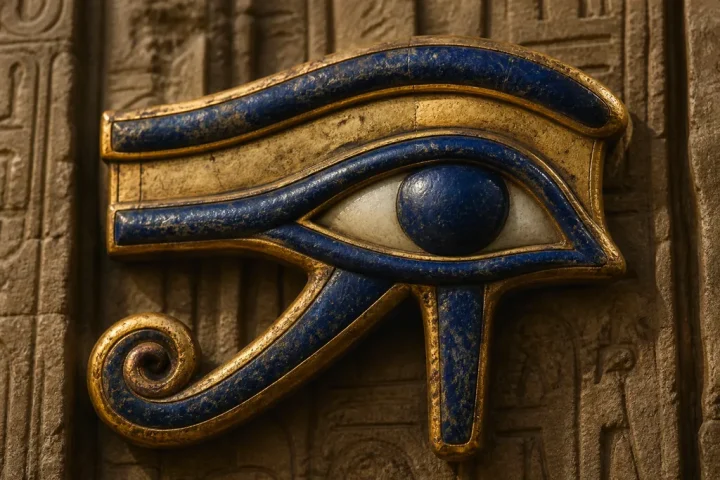
Her symbols may include the throne, the Moon, Sirius, wings, the ankh, the sistrum, the veil, the knot of Isis, the cow horns and lunar orb, the throne crown, the Eye of Horus and the image of mother and child.
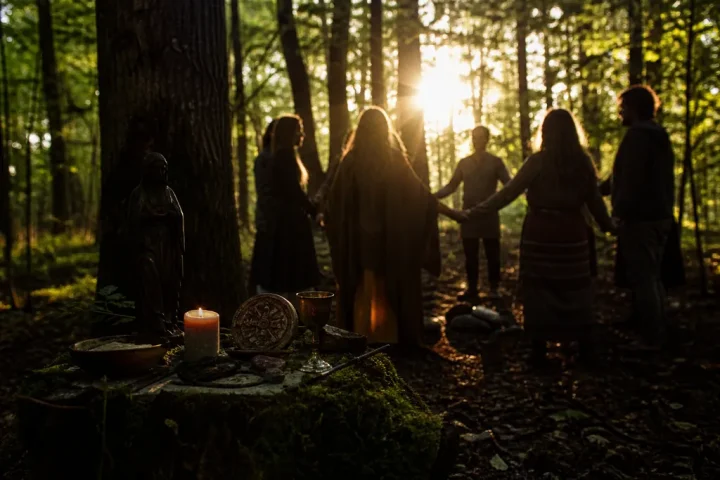
Isis may be approached in rituals of healing, protection, grief work, fertility, magical empowerment, ancestral devotion, dreamwork, childbirth blessing, spiritual initiation and the recovery of personal power after loss.
Her magic is not shallow. It is born from love, grief, discipline and the willingness to search the whole world for what has been broken.
Isis and Manifestation
Isis also carries a profound message for manifestation. She is the goddess who refuses to accept final defeat. When Osiris is murdered and dismembered, she does not collapse into helplessness. She searches, gathers, restores and breathes life back into what was lost.
This is a powerful magical principle. Manifestation is not only about wishing for something new. It is also about reclaiming scattered power, gathering the broken parts of the self, and restoring the inner throne.
Isis teaches that words have power, names have power, devotion has power and identity has power. She obtains the secret name of Ra because she understands that reality is shaped by hidden language. She resurrects Osiris because she understands that love combined with magic can transform death itself.
For those walking a path of self-transformation, Isis says: do not underestimate your own magic. What has been scattered can be gathered. What has been silenced can speak again. What has been wounded can become powerful.
The Occult Meaning of Isis
Isis is the Great Lady, the Mistress of Magic, the Mother of Gods and the Queen of the Throne. She is the grieving widow who resurrects her beloved, the mother who protects her child, the sorceress who learns the secret name of Ra, the healer who visits the sick, the initiatory goddess who lifts her veil, and the universal mother whose worship crossed continents.
She is one of the great bridges between ancient religion and Western esotericism. Her presence runs through Egyptian myth, Roman mystery religion, Hermetic wisdom, magical practice, occult symbolism, goddess spirituality and the hidden roots of later sacred feminine imagery.
Isis is not merely a goddess of the past. She remains one of the most potent symbols of divine feminine power ever known. She is wisdom, truth, healing, magic, motherhood, resurrection and the eternal mystery behind the veil.
Explore Isis, Egyptian Magic and the Mysteries with Occult World
If Isis, Mistress of Magic and Mother of Gods, speaks to you, then you are already standing at the doorway of one of the deepest streams of occult wisdom. Isis is not simply an ancient Egyptian goddess. She is a living symbol of magic, healing, resurrection, sacred names, divine motherhood, Hermetic wisdom and the veiled mysteries of initiation.
Inside the Occult World Mystery School, you can explore goddesses like Isis in a deeper and more magical way. You can learn how Egyptian mythology connects with witchcraft, manifestation, Hermeticism, ritual practice, sacred feminine power, magical healing, necromancy, protection work and the transformation of the self.
You will also find courses and discussions on Ancient Grimoires, Witchcraft, Kabbalah, Demonology, Angels, Hoodoo, Voodoo, Practical Tarot, Necromancy, Black Magick, the Illuminati and many other occult traditions. More importantly, you can meet fellow witches, occultists, magical practitioners, demonologists, mythologists and serious seekers who understand that mythology is not just something to read about. It is something to work with, embody and awaken within your own magical life.
If the name Isis calls to your desire for magic, healing, protection and spiritual rebirth, do not ignore it.
Join the Occult World Mystery School today and step into a living circle of mythology, witchcraft, Hermetic wisdom, manifestation, occult study and fellow seekers walking the hidden path together.
ALSO KNOWN AS:
Au Set
ORIGIN:
Egypt
FAVOURED PEOPLE:
Theoretically everyone, but especially women, single mothers, orphans, occultists, and mariners
MANIFESTATION:
Isis is an incredible magician and can take any form she chooses. She may manifest as a cow, kite, or swallow. She may appear as a beautiful queen, a pregnant woman, or a woman absolutely devastated by despair and grief.
ICONOGRAPHY:
Isis is portrayed in many forms:
• Traditional images of Isis are the prototype for the modern Madonna and child. A woman, frequently carved from black stone, which in Egyptian cosmology represents eternal life, holds a nursing baby to her breast.
• She wears a crown topped by a throne (the meaning of her name) or a crown of horns cradling the full moon.
• The Louvre Museum in Paris possesses a rare terra-cotta image of beautiful Isis weeping for her true love, Osiris.
Spirit allies:
Isis is frequently accompanied by an entourage of spirits, including Anubis, Nephthys, Heket, Min, Bes, Khnum, Selket, and the Scorpion Guardians; she is a friendly, gregarious spirit and will share her altar.
Emblem:
The tyet amulet, also known as the Buckle of Isis or Blood of Isis is a protective amulet usually formed from cornelian or red glass and representing the goddess’ menstrual blood-soaked sanitary pad.
COLOURS:
Black, blue
ELEMENT
Water
BOTANICALS:
Vervain, myrrh tree, sycomore fig
Mineral:
Bloodstone
Metal:
Gold
Sacred creatures:
Snakes, cows, crocodiles, scorpions, kites (a type of raptor), swallow
PLANET:
Moon
Constellation:
Virgo
Star:
An Egyptian name for the star Sirius (in Egyptian Sothis) is “Soul of Isis.” (Sirius’ first appearance in the night sky signaled the annual Nile Flood.)
Sacred site:
There is a theory that the name Paris derives from Par-Isis, meaning the barque or grove of Isis. In Roman times, Isis had a temple at the western limits of the city, the marshes on the Left Bank of the Seine. The churches of Saint Sulpice and Saint Germain-des-Prés are built over sites once dedicated to Isis.
OFFERINGS:
Traditionally Isis accepts offerings of milk, honey, flowers, incense, and candles.
SEE ALSO:
- Anubis
- Aphrodite
- Black Madonna
- Demeter
- Harpokrates
- Hathor
- Heket
- Horus
- Io
- Kwan Yin
- Min
- Neith
- Nephthys
- Osiris
- Persephone
- Serapis
- Stella Maris
- Zar
SOURCES:
- Encyclopedia of Spirits: The Ultimate Guide to the Magic of Fairies, Genies, Demons, Ghosts, Gods & Goddesses– Written by Judika Illes Copyright © 2009 by Judika Illes.
- The Encyclopedia of Witches, Witchcraft and Wicca – written by Rosemary Ellen Guiley – Copyright © 1989, 1999, 2008 by Visionary Living, Inc.



Follow